
Bridgeport City Directory Collections
The Bridgeport History Center is the main local shelf for a Bridgeport collection search. Its finding aid describes a run of approximately 1855-1990, with physical volumes, microfilm, and partial access through library databases. From 1895 onward, volumes generally include both alphabetical names and street listings. The exact sequence has gaps and publisher changes, so verify the specific year rather than assuming an annual book exists.
| Collection | Years | Where held | Access |
|---|---|---|---|
| Bridgeport directory volumes | 1855-1990 | History Center shelves, microfilm, partial databases | In-library; ask for the exact volume |
| Alphabetical and street sections | Generally 1895 onward | Annual directory volumes | Reverse address work plus name search |
| Local newspapers | 1810s-present, with title gaps | History Center microfilm and digital archive | Search notices, deaths, businesses, events |
| Yearbooks and local histories | Various twentieth-century years | Library collections and databases | Class, activity, alumni, and place clues |
| Maps and Sanborn materials | 1867-1929 library-film years; LOC items | History Center, Historic Map Works, LOC | Footprints, lots, streets, and land context |
The Bridgeport directory finding aid should be checked before a visit. The central library is at 925 Broad Street, and the listed public library number is 203-576-7400. Ask staff whether the volume is on the shelf, on microfilm, or available through a licensed database.
Why 1895 Opens the Bridgeport Street Section
A Bridgeport volume before 1895 may be most useful through its alphabetical names and business entries. From 1895 onward, the History Center finding aid generally describes a second street or address section. That change makes a reverse search possible: read a number in sequence, capture every printed household or business, then use the alphabetical pages to resolve initials, occupation, spouse or widow notation, and a possible spelling variant.
The street section is valuable when a surname is hard to read, a household is listed under a spouse, or a person appears as a boarder or business occupant. It can also reveal how a block's use changed. Still, the entry reflects the publisher's compilation date and editorial practice. It does not identify everyone present at the property, and later digitization may introduce OCR errors.
The History Center's genealogy route places historical volumes beside yearbooks, newspapers, local histories, maps, cemetery books, and licensed databases.
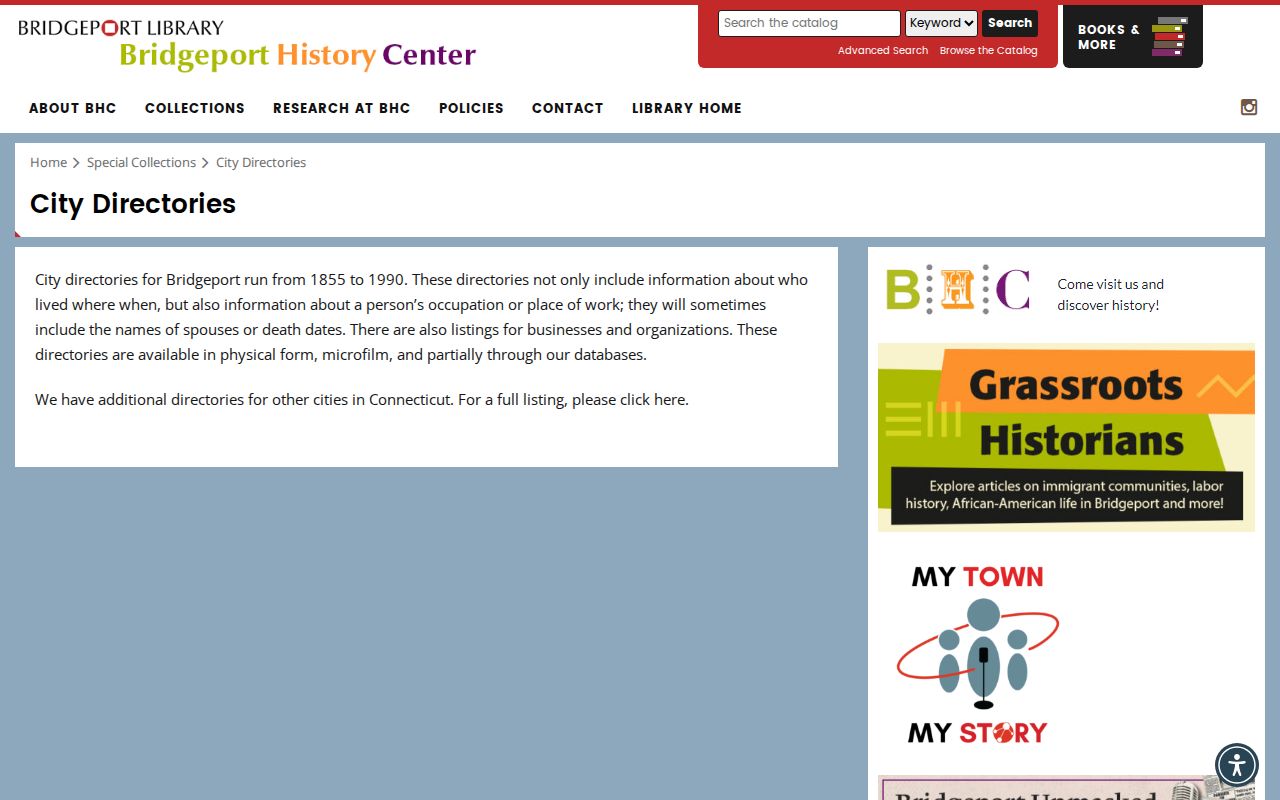
The collection view reinforces the practical method: search the name, then read the street section, and record the volume and page before moving to another source.
Read a Bridgeport City Directory Entry
A typical Bridgeport directory entry is compact, so each mark matters. The printed name may include initials, a title, “Mrs.”, or a widow notation. A residence address may sit beside an occupation or trade, while a later volume may add a telephone number. Business and organization pages can list officers or an office address. Owner or renter marks are volume-specific and should never be assumed in every year.
Use the volume's own abbreviation key. Common shorthand described in the research includes “bds” for boards, “h” for home or house, “emp” for employed by, “do” for ditto, “wid” for widow, and rooms or boarding notation. Treat the printed form as evidence of how the publisher described the person, not as a modern identity profile.
| Name | Printed surname, initials, title, spouse form, or widow notation. |
|---|---|
| Address | Street number and name, with a business or second address in some volumes. |
| Occupation | Trade clue, which can help distinguish two people with the same name. |
| Household clue | Spouse, boarding, rooms, or a linked entry where the volume provides one. |
| Street placement | The reverse-directory position for reading a block numerically. |
- Householder index
- An index organized around the person or household name, rather than a full modern address roster.
- Criss-cross directory
- A reverse listing read by street and number, often paired with the alphabetical pages.
- Abbreviation key
- The volume's explanation of shorthand. Always use the key for that year.
The Bridgeport History Center genealogy page is the right place to ask about a specific entry schema when a scan is not available online.
Use the library's collection context to distinguish a directory, a yearbook, an obituary clipping, and a map before citing the result.
Bridgeport Directory Publishers
Price & Lee Co., North American Directory Publishers, and other local or national firms appear in the Bridgeport run. The finding aid is assembled from acquisitions, so a web list that skips a year does not prove that a volume never existed. Record the exact publisher, year, call number, format, and whether the alphabetical and street sections are complete.
Later twentieth-century material may mix directory and telephone-directory forms. A telephone entry can have a different selection rule from an annual resident volume. A business or institutional page may be preserved even when a household entry is missing. The practical check is to ask the desk for the target year and the adjacent years, then note what kind of directory each reel or book contains.
For earlier or scattered material, the Connecticut Archives Online finding aids and Connecticut State Library genealogy guides can point to manuscripts, court records, naturalization material, and local collections.
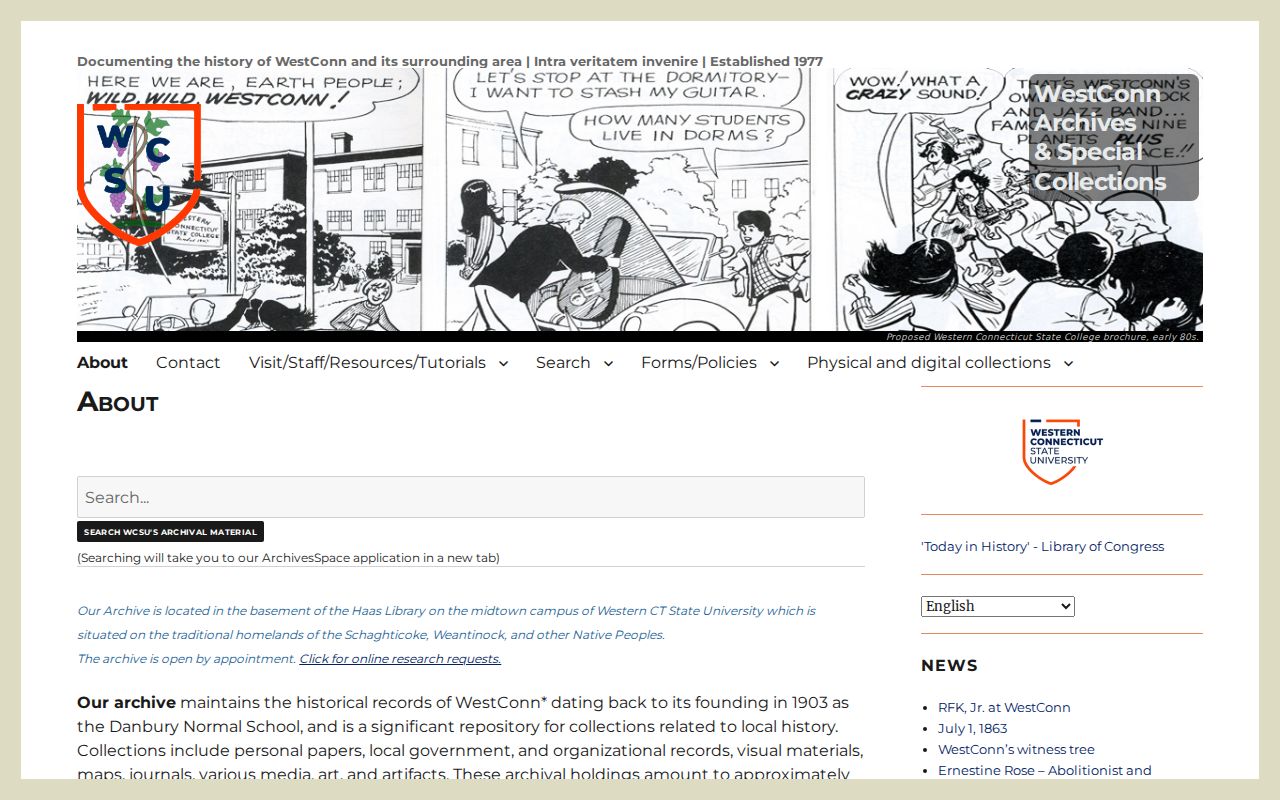
Archives add context around a directory entry, but an archival finding aid is not itself a resident listing. Cite the box, collection, or reel that actually supplies the name or address.
Pair Bridgeport City Directories With Census Years
A directory year and a census year answer related but different questions. The directory may have been compiled before or after its cover year, while a census records a household at an enumeration date. Federal schedules through 1950 are public under the 72-year rule. Pairing the sources can explain a changed first initial, a new household head, a move, or a missing directory entry without treating either source as a complete annual roll.
- Write the exact directory year, street number, printed name, occupation, and page.
- Check the nearest public census year and compare the household, age, birthplace, occupation, and address context.
- Read the adjacent directory years for spouse, widow, boarder, business, or nearby-number changes.
- Use a newspaper, vital record, probate case, map, or deed to test a major change.
- Keep the source date and page with every conclusion, especially when a name is common.
The Connecticut State Library genealogy guide can help locate census, probate, vital, and archive routes when a directory clue needs a second record.
Bridgeport Directory Newspapers
Newspapers are a bridge between directory years. The History Center lists runs that include the Bridgeport Courier, Messenger, Republican Farmer, Daily Standard, Evening Farmer, Herald and Sunday Herald, Evening Post or Connecticut Post, Telegram, Times, and other titles. The runs have gaps and title changes. Search a street, business, church, school, organization, and surname because a person may appear in a notice without an obituary-index entry.
An obituary can suggest a death date, spouse, parent, cemetery, former address, or executor. A marriage announcement can explain a surname change. A sale notice can connect an owner to a property. None is a certified vital or court record. Pair the notice with a certificate, deed, probate index, or directory year and cite the page image rather than relying on OCR alone.
The Bridgeport newspaper collection is the local route for microfilm titles, years, and database access.
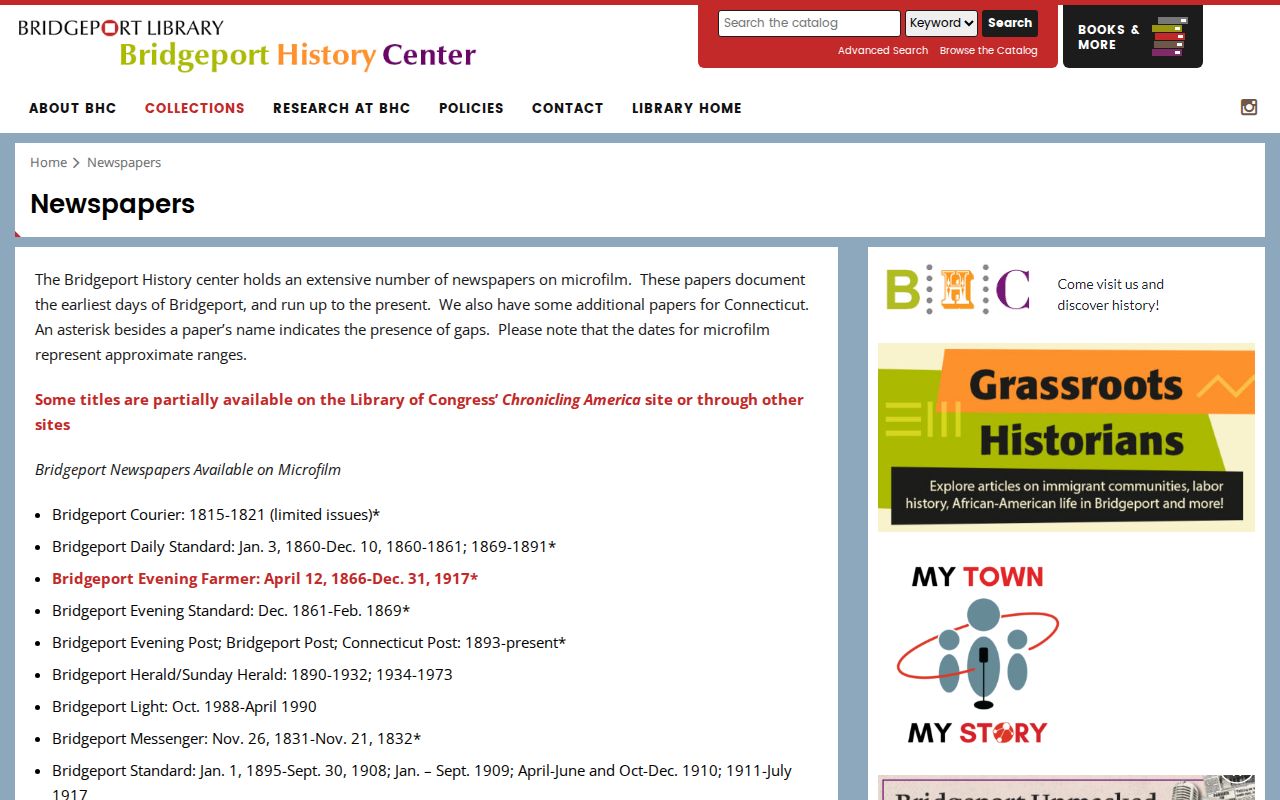
Newspaper context can explain why an address entry changed, but the directory, notice, and official certificate should remain separate citations.
Bridgeport Directory Maps and Footprints
Maps add the physical layer that a directory cannot. The History Center map archive lists film years including 1867, 1876, 1888, 1889, 1893, 1896, 1898, 1910, 1917, and 1929. Library resources also point to Historic Map Works. The Library of Congress has public Bridgeport Sanborn items from 1884, 1898, 1904, and 1913, while Yale guides list additional years.
A Sanborn sheet can show a building footprint, lot line, use, street relationship, and nearby structure. It may explain why a directory number changes or why a house appears to contain several units. It does not identify every resident. Match the sheet number, street, lot, and owner clue to the directory and deed sequence before making a house-history claim.
The Bridgeport map archive is the local starting point for atlases, lot-line maps, Sanborn materials, and research directions. The History Center archives route helps when a manuscript or finding aid sits outside the directory shelf. The Library of Congress Sanborn guide explains how to search related map holdings. The Fairfield Museum historical collections add regional context when a Bridgeport address reaches beyond the city.
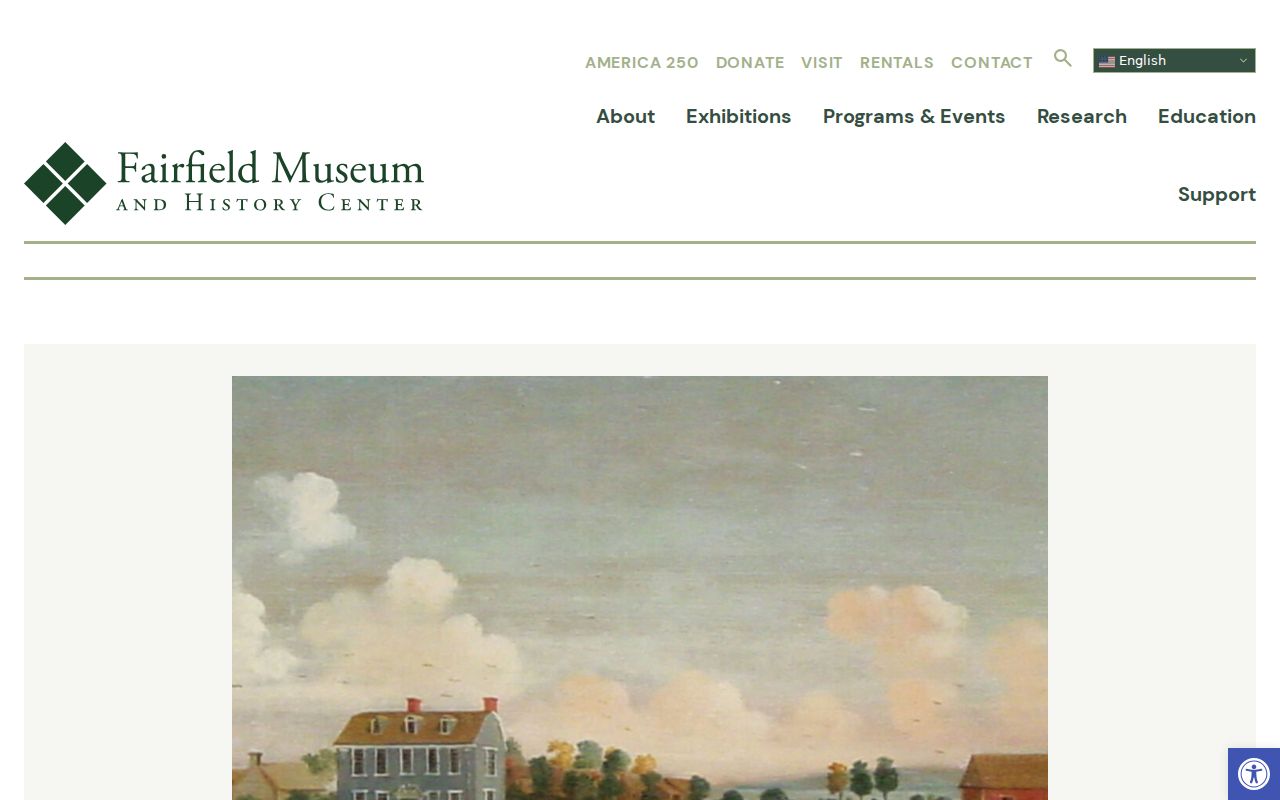
Regional historical collections can help when a Bridgeport address connects to Fairfield County family, business, or property material, but access and online availability vary.
Bridgeport Digital Directory Archive
Bridgeport's Advantage Preservation archive can be browsed by decade and subject from the 1860s through the 2000s. Subjects observed in the research include Bridgeport Brass, General Electric, Bullard, Singer, Hall Neighborhood House, NAACP, and Connecticut State Police material. These collections can place a resident, institution, street, or organization in a dated local story even when the local volume has no useful entry.
Search the archive with a surname and an organization, then test street names, old spelling, initials, and neighboring institutions. OCR is a lead only. Confirm a street number or surname in the page image, because the scan can be read correctly while the OCR drops a digit or splits a name. Save the title, publication date, page, and subject path.
The digitized Bridgeport archive offers the public browse route and shows why an institutional collection can supplement a printed directory without becoming one.
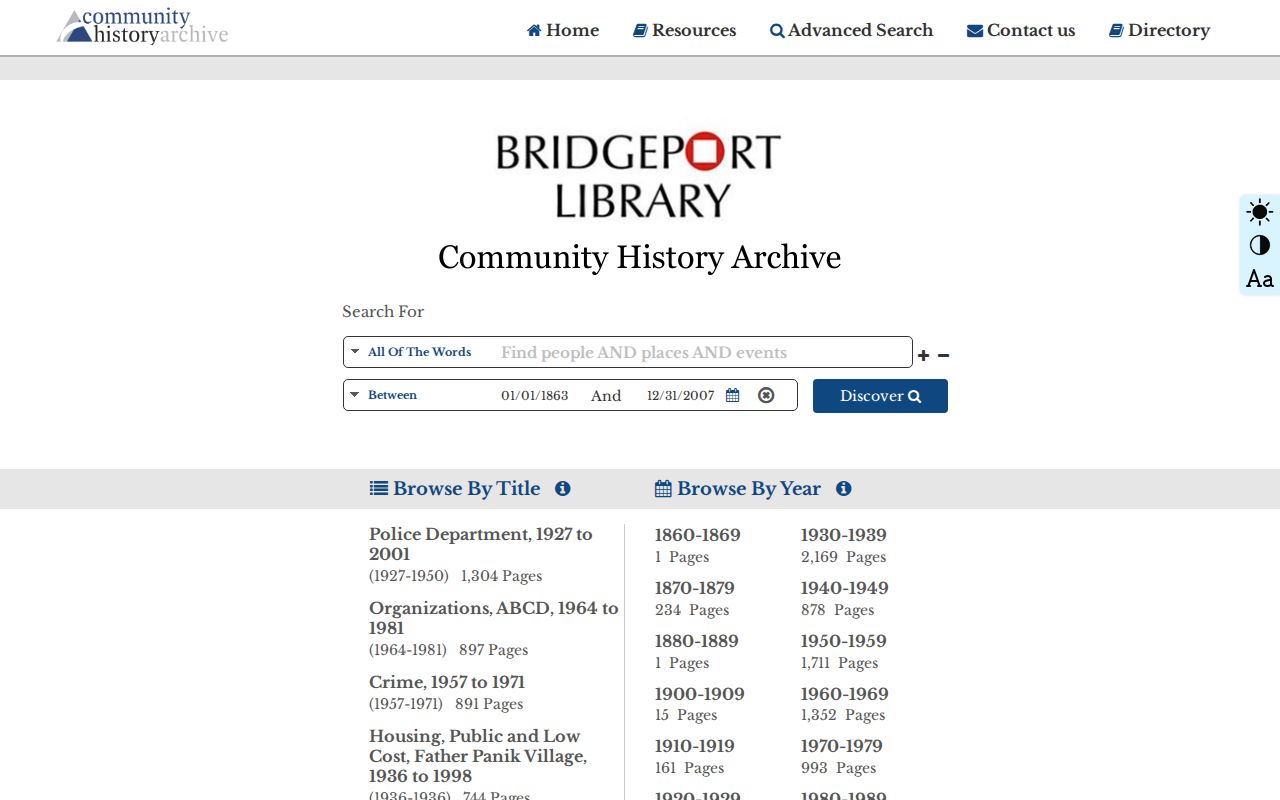
Use a digitized page as a source artifact with its own date and title, then compare it with the directory year and official record that support the same conclusion.
Use Bridgeport City Directories for Family History
For a family-history project, choose one household and walk it across years instead of collecting isolated names. Begin with the exact address if known. Read the street section, capture the household line, then check the alphabetical entry for initials, occupation, spouse, and alternate address. Move one year backward and one year forward. A changed name or disappearance is a clue to test, not a final relationship.
Next, pair the directory with the nearest census, newspaper notices, maps, and probate or vital records. If the house number is absent, try adjacent numbers, a street name change, a business entry, a boarding notation, and the legal parcel. For an address before the 1855 directory spine, start with Town Clerk maps and deeds, church or cemetery records, newspapers, and State Library archives.
History Center hours listed in the research are Monday-Tuesday 10:00 a.m.-6:00 p.m., Wednesday-Thursday noon-8:00 p.m., and Friday-Saturday 10:00 a.m.-5:00 p.m., with Sunday closed. Call 203-576-7400 before travel, especially during compact-shelving or offsite availability changes.
Reading rule. A Bridgeport directory entry can place a person at an address in a printed year. It cannot certify a present residence or prove every household relationship.